What a New Roof Costs in Colorado Springs in 2026
A new roof is one of the largest single investments most Colorado Springs homeowners will make in their house, and the first question is always the same: what is this going to cost? For a typical single-family home in the Pikes Peak region in 2026, a full architectural asphalt shingle replacement commonly runs about $8,000 to $20,000 or more, depending on the size and complexity of the roof. Impact-resistant Class 4 shingles sit higher, and top-tier materials like standing-seam metal can run two to three times an asphalt job.
Every number in this guide is an estimate and a range, not a quote or a guarantee. Two houses on the same street can price very differently once you factor in roof pitch, the number of layers to tear off, decking condition, and how many valleys, dormers, and skylights the crew has to work around. The only way to know what your roof will actually cost is a written, on-site estimate. You can start with a free inspection and we will put real numbers on paper.
Estimates, not promises
Ranges in this article reflect typical 2026 pricing across the Colorado Springs area. Material costs, labor availability, and post-storm demand all move prices. Treat these figures as planning guidance, then get a written estimate for your specific home. Questions? Call 844-967-5247.
How Roofers Price a Job: The Roofing Square
Roofers do not price by the square foot of your floor plan. They price by the roofing square, and understanding that one term demystifies almost every estimate you will read. A square equals 100 square feet of roof surface (a 10-foot by 10-foot patch). A modest ranch home might be 15 to 20 squares; a large two-story with steep gables can be 35 to 50 squares or more.
Because your roof surface is bigger than your home's footprint (pitch and overhangs add area), a 2,000-square-foot house often has a roof of 22 to 28 squares. When a contractor quotes a price per square, that figure bundles materials, tear-off, underlayment, flashing, labor, disposal, and cleanup. The steeper and more cut-up the roof, the higher the per-square number climbs.
| Home size (approx.) | Typical roof size | Architectural asphalt estimate |
|---|---|---|
| 1,000-1,500 sq ft | 16-22 squares | $8,000-$13,000 |
| 1,500-2,200 sq ft | 22-30 squares | $11,000-$18,000 |
| 2,200-3,000 sq ft | 30-40 squares | $15,000-$24,000 |
| 3,000+ sq ft / complex | 40-55+ squares | $20,000-$35,000+ |
These ranges assume a standard architectural (dimensional) asphalt shingle and a roof of average steepness with a single layer to tear off. Move to impact-resistant shingles, add a second story, or discover rotten decking underneath, and the number shifts. For most homeowners this is a residential roof replacement decision, and the estimate should spell out exactly what is included.
The Cost Factors That Move Your Estimate
Two roofs of identical square footage can differ by thousands of dollars. Here is what drives the spread, and why an honest contractor walks the roof before quoting rather than pricing off satellite images alone.
- Size (squares) — the single biggest factor; more surface means more material and labor
- Pitch and steepness — a steep roof is slower and requires fall-protection staging, raising labor cost per square
- Number of stories — a two- or three-story home means harder access, longer ladders, and more setup time
- Tear-off layers — stripping one layer is standard; a second or third layer adds labor and disposal fees
- Material grade — 3-tab, architectural, Class 4 impact-resistant, metal, and tile each occupy a different price tier
- Decking repairs — rotten or delaminated sheathing found during tear-off is replaced at added cost, often per sheet
- Penetrations and complexity — valleys, dormers, chimneys, skylights, and pipe boots each add flashing labor
- Permits — El Paso County and the City of Colorado Springs require a roofing permit, a real line item on the job
| Cost factor | Low-cost scenario | Higher-cost scenario |
|---|---|---|
| Roof pitch | Walkable 4/12 to 6/12 | Steep 9/12+ requiring staging |
| Stories | Single story, easy access | Two to three stories, tight lot |
| Tear-off | One existing layer | Two or three layers to strip |
| Decking | Sound sheathing throughout | Multiple rotten sheets replaced |
| Complexity | Simple gable, few penetrations | Many valleys, dormers, skylights |
This is why we never hand out a firm price without a roof inspection. A number scribbled from a truck window is a guess; a written estimate after someone has been on your roof is a plan.
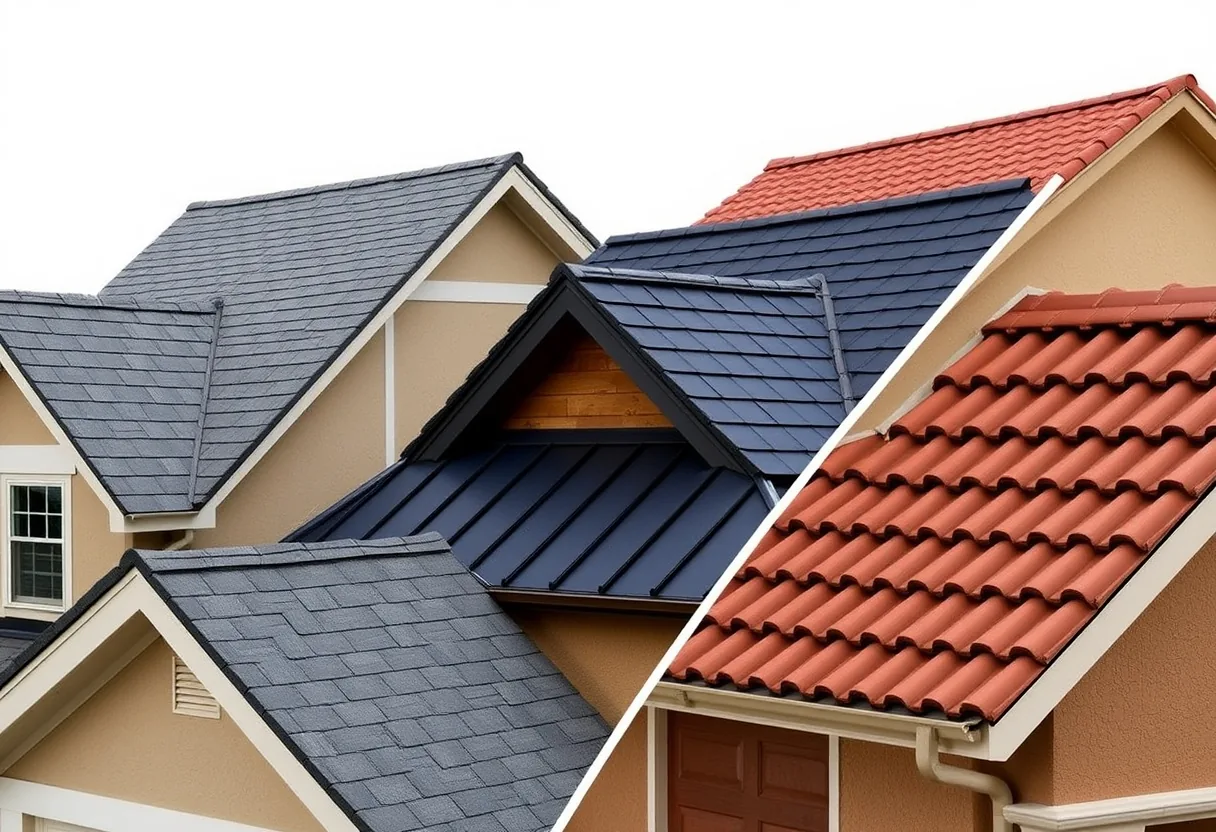
Roofing Materials for Colorado's Climate
Colorado Springs asks a lot of a roof: intense high-altitude UV, heavy spring snow loads, dramatic temperature swings, and some of the most frequent hail in the country. The right material balances upfront cost against how well it stands up to all of that. Here are the main options homeowners weigh in 2026.
- 3-tab asphalt — the budget flat-profile shingle; lowest cost but the shortest life and the weakest hail resistance
- Architectural asphalt — dimensional, layered shingles; the regional default for looks, value, and durability
- Impact-resistant Class 4 asphalt — architectural shingles engineered to resist hail; higher cost, strong storm value
- Metal (standing seam / metal shingle) — long lifespan, excellent snow shed and fire resistance; top-tier price
- Tile (concrete / clay) — very long-lived and fire-safe but heavy, needs structural capacity, and carries a high price
- TPO membrane — a single-ply system for flat and low-slope roofs, common on commercial and modern flat sections
For most Colorado Springs homes the practical decision comes down to architectural asphalt versus Class 4 impact-resistant asphalt, with metal roofing as the top-tier long-term upgrade. The table below compares them head to head.
Material Comparison: Lifespan, Cost & Performance
Use this comparison to narrow your options before the estimate conversation. Cost tiers are relative (one dollar sign is the most affordable, four is top-tier), and performance reflects how each material typically behaves in the Pikes Peak region's hail, snow, and fire exposure.
| Material | Typical lifespan | Cost tier | Hail resistance | Snow / fire |
|---|---|---|---|---|
| 3-tab asphalt | 15-20 years | $ | Low | Fair / good |
| Architectural asphalt | 25-30 years | $$ | Moderate | Good / good |
| Class 4 impact-resistant | 30-40 years | $$$ | High | Good / good |
| Standing-seam metal | 40-70 years | $$$$ | High | Excellent / excellent |
| Concrete / clay tile | 50+ years | $$$$ | Moderate-high | Good / excellent |
| TPO (flat / low-slope) | 20-30 years | $$ | N/A (flat) | Good / good |
Notice how the higher cost tiers buy you years and storm resilience. A Class 4 shingle costs more than a standard architectural one, but in Hail Alley it can be the difference between one replacement and two over the same span. Metal costs the most upfront and often outlives the mortgage. The right answer depends on how long you plan to stay and how much storm risk you want to design out of your home.
Hail Season Reality: Living in Hail Alley
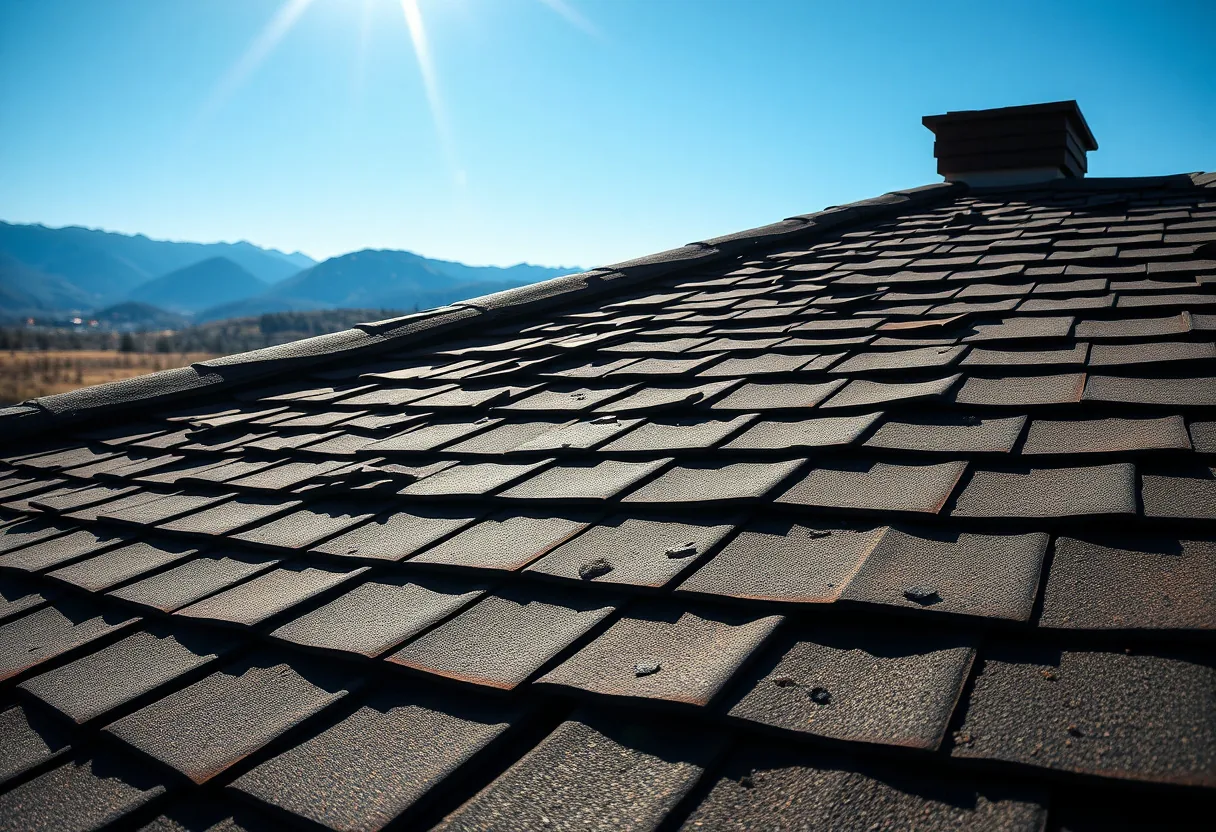
Colorado Springs sits inside Hail Alley, the stretch of the Front Range where Colorado, Nebraska, and Wyoming meet and produce more damaging hail than almost anywhere in North America. The primary hail season runs roughly April through September, peaking in late spring and midsummer when afternoon storms build fast off the mountains. If you own a home here long enough, hail is not a question of if but when.
Hail does not always announce itself. Small stones can bruise shingles, knock granules loose, and crack seals without leaving an obvious hole, quietly shortening the life of the roof. That slow damage is exactly why a post-storm roof inspection matters even when the roof looks fine from the ground.
This is the strongest argument for Class 4 impact-resistant shingles in our market. They are tested to withstand a steel ball dropped from height without cracking, and they hold up to real hail far better than standard shingles. Many homeowners also find that impact-resistant roofing can qualify them for a discount from their insurer, so ask about that when you choose a material. When a storm does hit, our storm and hail damage repair team is who you call.
How the Hail Damage Claim Process Works
After a major hailstorm, most Colorado Springs homeowners do not pay for a new roof out of pocket. They work through the storm-damage claim process with their insurer, and a good roofer is your guide through every step. To be clear: we are a roofing contractor, not an insurance company. What we do is help you document damage, meet the adjuster, and get the roof built right once the claim is settled.
- Get an inspection — we get on the roof, photograph hail strikes and granule loss, and tell you honestly whether the damage is worth a claim
- File the claim — you contact your insurer and report the storm date and damage; we provide our documentation to support it
- Meet the adjuster — we meet your insurer's adjuster on the roof to make sure the real damage is seen and accounted for
- Review the scope — the insurer issues a damage scope and estimate; we review it against what the roof actually needs
- Pay your deductible — you pay your deductible, the insurer funds the approved repair, and we schedule the build
- Build and finalize — we replace the roof, document completion, and provide the paperwork your insurer needs to release final payment
Beware anyone who offers to waive your deductible
A contractor who promises to eat or waive your deductible is a red flag, and in Colorado it can cross legal lines. The deductible is your share of the claim. An honest roofer helps you navigate the process, documents damage truthfully, and never fabricates it. If a pitch sounds too good to be true, it is.
We help with this process on every storm job, and we can also point you to financing and claims assistance if timing or the deductible is a hurdle. The goal is a correctly built roof, not a fight with your insurer.
The Replacement Process and Timeline
Once you approve the estimate, a straightforward asphalt replacement on an average Colorado Springs home is usually a one- to two-day job in good weather. Larger, steeper, or higher-end-material roofs take longer, and Colorado weather can add a day here and there. Here is what a typical residential roof replacement looks like from start to finish.
- Estimate and material selection — you review the written estimate and choose shingle type and color
- Permit pull — we secure the roofing permit from the City of Colorado Springs or El Paso County jurisdiction
- Delivery and protection — materials arrive and we protect landscaping, siding, and windows below the work
- Tear-off — the old roofing is stripped down to the decking so nothing is buried over
- Decking inspection and repair — any rotten or damaged sheathing is replaced before new material goes on
- Dry-in and install — underlayment, ice-and-water shield, flashing, shingles, and ridge venting go on in sequence
- Cleanup and final inspection — we magnet-sweep for nails, haul debris, and walk the finished roof with you
Local jurisdictions require a permit and often a final inspection on a full replacement, which protects you: it means the work is documented and code-compliant. A contractor who wants to skip the permit is cutting a corner you will inherit when you sell the home.
Warranties: Manufacturer vs. Workmanship
A roof comes with two very different warranties, and confusing them is a common and expensive mistake. Understanding both tells you what you are actually protected against.
- Manufacturer warranty — covers defects in the shingles or materials themselves, typically for decades; backed by the maker, not the roofer
- Workmanship warranty — covers errors in how the roof was installed; backed by the contractor, and only as good as the contractor's longevity
Here is the catch most homeowners miss: the vast majority of roof leaks come from installation errors, not material defects, so the workmanship warranty is often the one that actually saves you. And a workmanship warranty is only worth something if the company is still in business years from now. This is a major reason to hire an established local roofer over a storm-chaser who will be three states away by next spring.
| Warranty type | What it covers | Who stands behind it | Typical term |
|---|---|---|---|
| Manufacturer | Material / shingle defects | The shingle manufacturer | 25 years to lifetime |
| Workmanship | Installation and labor errors | Your roofing contractor | Varies by contractor |
How to Vet a Colorado Springs Roofer
After a big storm, out-of-state crews flood the Front Range chasing insurance money. Some are fine; many vanish the moment the check clears, leaving you with a workmanship warranty worth nothing. Protecting yourself comes down to a short checklist you can run before you sign anything.
- Local and established — a real Colorado Springs address and a track record here, not a magnetic sign on a rental truck
- Properly licensed and carries insurance — verify they hold the required credentials for El Paso County work
- Written estimate — a detailed, itemized scope on paper, never a verbal number or a napkin figure
- No storm-chaser tactics — walk away from high-pressure door-knocking, deductible-waiving offers, or demands for large upfront cash
- References and reputation — a company you can look up, with a history you can actually check
- Clear warranty terms — a workmanship warranty spelled out in writing, from a company likely to be around to honor it
The storm-chaser test
Ask one question: where is your office and how long have you worked in Colorado Springs? A local roofer answers instantly. A storm-chaser gets vague. Your workmanship warranty is only as durable as the company behind it, so hire the crew that will still be here when you need them.
Financing an Urgent Roof Replacement
Sometimes a roof cannot wait for the budget to catch up. A storm tears off shingles, a leak is spreading across the ceiling, and the repair has to happen now. When a claim does not cover the full cost, or the deductible is a strain, financing bridges the gap so a small problem does not become a structural one.
We offer financing and claims assistance to help homeowners move quickly on an urgent replacement, spreading the cost into manageable payments rather than one lump sum. Combined with our help navigating the storm-damage claim process, the aim is simple: get a sound roof over your family without a financial emergency. Ask about options when we walk your roof.
Our Service Area and Getting Started
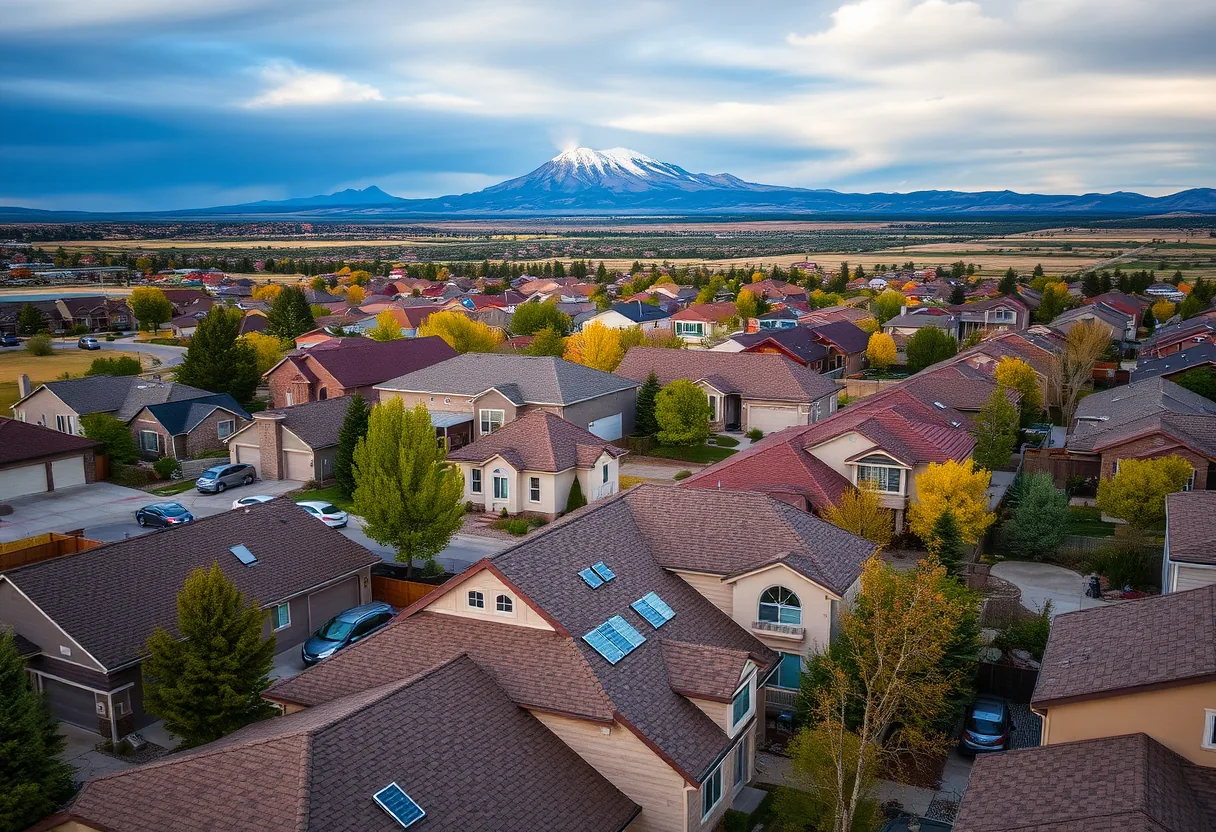
Pikes Peak Roofing serves Colorado Springs and the surrounding Front Range communities. If your home is in any of these areas, we can get out for an estimate:
- Colorado Springs — our home base across every neighborhood in the city
- Monument — including the higher-elevation communities to the north
- Falcon — the growing area east of the city
- Fountain — south of Colorado Springs along the I-25 corridor
- Woodland Park — up in the mountains to the west
- Manitou Springs — at the foot of Pikes Peak
Whether you need a full residential roof replacement, a metal roofing upgrade, storm and hail damage repair, or just an honest roof inspection after a rough spring, start with a free inspection. We will get on the roof, put real numbers on paper, and walk you through every option, no pressure. Call 844-967-5247 to schedule.
Frequently Asked Questions
For a typical single-family home, an architectural asphalt replacement commonly runs about $8,000 to $20,000 or more, driven by roof size, pitch, and complexity. Class 4 impact-resistant shingles cost more, and metal roofing can run two to three times an asphalt job. These are estimates. A written on-site estimate is the only way to know your exact price.
A roofing square is the unit contractors use to measure and price roofs. One square equals 100 square feet of roof surface, or a 10-foot by 10-foot area. Because your roof is larger than your home's footprint, a 2,000-square-foot house often has a roof of 22 to 28 squares. When a roofer quotes a price per square, it bundles materials, labor, tear-off, and cleanup.
For most homes in Hail Alley, yes. Class 4 shingles are tested to resist cracking from hail and hold up far better than standard shingles through our April-to-September storm season. They cost more upfront but can outlast a standard roof and reduce storm damage. Many insurers also offer a discount for impact-resistant roofing, so ask before you choose a material.
After a storm, a roofer inspects and documents the damage, then you file a claim with your insurer. The roofer meets the adjuster on the roof to confirm the damage, the insurer issues an approved scope, and you pay your deductible while the insurer funds the approved repair. We guide homeowners through each step, but we are a roofing contractor, not an insurer.
A straightforward asphalt replacement on an average Colorado Springs home is usually a one- to two-day job in good weather. Larger, steeper, or higher-end-material roofs take longer, and Colorado weather can add time. The full process, from estimate and permit to tear-off, decking checks, install, and cleanup, is typically wrapped up within a few days for most homes.
Yes. The City of Colorado Springs and El Paso County require a roofing permit for a full replacement, and often a final inspection. This protects you by ensuring the work is documented and code-compliant, which matters when you sell the home. A contractor who wants to skip the permit is cutting a corner you will inherit later. We pull the proper permits on every job.
Hire a local, established Colorado Springs roofer with a real address and a track record here. Be wary of out-of-state crews who door-knock aggressively, promise to waive your deductible, or demand large cash payments upfront. Your workmanship warranty is only as good as the company standing behind it, so choose one that will still be here years from now to honor it.
A manufacturer warranty covers defects in the shingles themselves and is backed by the maker, typically for decades. A workmanship warranty covers installation errors and is backed by your roofer. Since most leaks come from installation mistakes rather than material defects, the workmanship warranty is often the one that saves you, but only if the contractor is still in business.