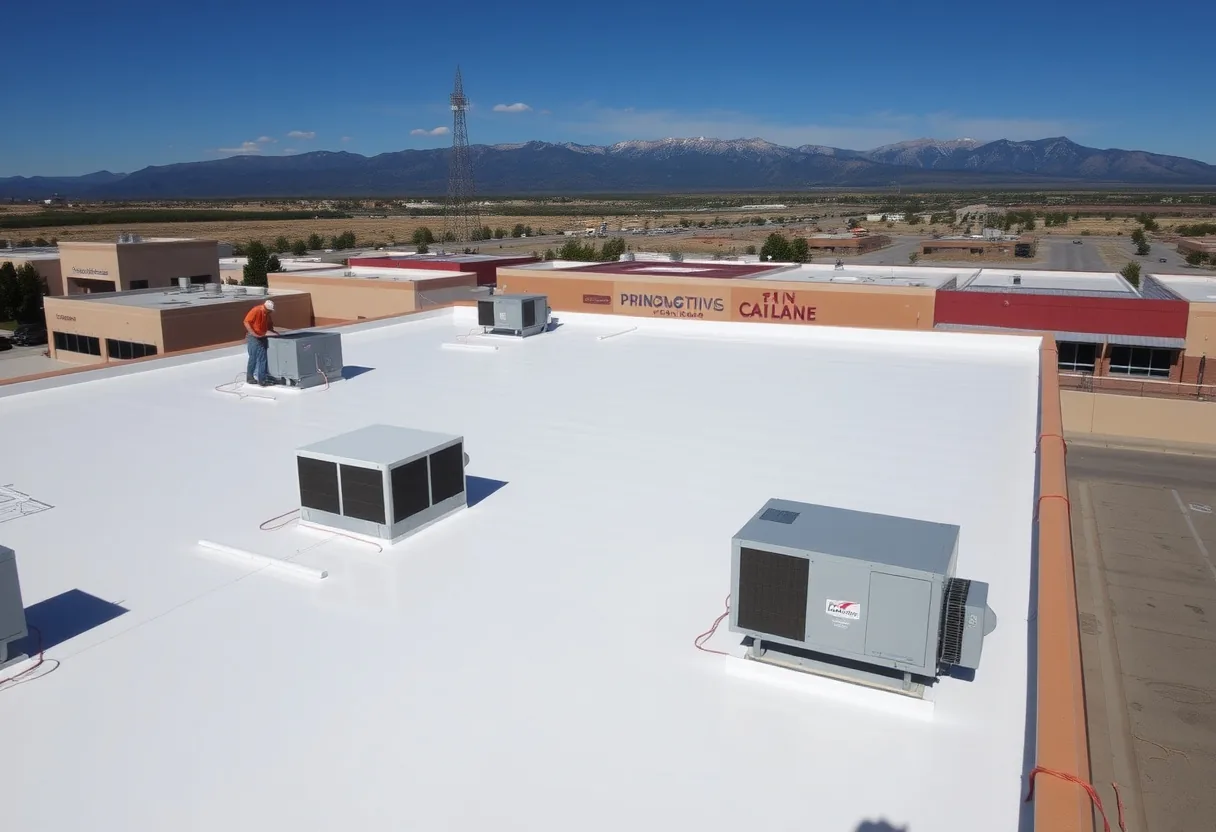
Commercial Roofing Systems We Install
Most commercial buildings in Colorado Springs wear a flat or low-slope roof, and the right membrane depends on your building, your budget, and how the space gets used. A restaurant with rooftop grease exhaust has different needs than a cold-storage warehouse or a multi-tenant retail strip. We install the full range of low-slope systems, plus standing-seam metal for the steep-slope sections that cap many commercial buildings.
There is no single best roof — there is a best roof for your structure. Below is how the common systems compare so you can weigh service life against up-front cost before you commit. When you are ready, a [free inspection](/quote/) puts real numbers against your actual deck and drainage.
| System | Typical Lifespan | Best Use | Notes |
|---|---|---|---|
| TPO single-ply | 20-30 years | Retail, office, warehouse | Reflective white surface — strong cool-roof pick for the sunny front range |
| EPDM rubber | 20-30 years | Large simple roofs, low foot traffic | Proven and economical; darker surface absorbs more heat than TPO |
| PVC single-ply | 20-30 years | Restaurants, kitchens, chemical exposure | Best resistance to grease, oils, and ponding — a top-tier membrane |
| Modified bitumen | 15-20 years | Smaller roofs, high-traffic areas | Multi-ply asphalt; tough underfoot for service techs and equipment |
| Built-up roofing (BUR) | 15-30 years | Older buildings, heavy loads | Classic tar-and-gravel; heavy, durable, redundant waterproofing layers |
| Standing-seam metal | 40-50 years | Steep-slope commercial sections | Longest service life; concealed fasteners shed snow and resist wind uplift |
Buildings We Serve Across the Pikes Peak Region
Commercial roofing is a wide category, and each building type carries its own priorities — foot traffic, rooftop equipment, tenant disruption, and code all shift the plan. We work on properties throughout Colorado Springs, Monument, Fountain, and the surrounding front range.
- Retail and shopping centers — multi-tenant strips where a leak over one unit threatens every lease
- Office buildings — clean, quiet installs that keep tenants working through the project
- Industrial and warehouse — large square-footage roofs where material choice drives long-term cost
- Multifamily and HOA — apartments and condos where one board decision covers many roofs at once
- Restaurants — grease-resistant PVC and careful flashing around rooftop kitchen exhaust
- Churches and schools — occupied-building logistics and phased work around service and class schedules
One point of contact, start to finish
Property managers juggle enough. On every commercial job you get a single project lead who handles the scope, the crew schedule, and the paperwork — including the documentation a property owner needs for a storm insurance claim — so you are never chasing three people for one answer.
What Colorado Springs Does to a Commercial Roof
The front range is one of the hardest climates in the country on a roof. We sit in the heart of hail alley, above 6,000 feet, under intense sun, with real snow load and hard wind. A membrane that lasts 30 years in a mild coastal market can fail early here if it is not specified for the conditions.
- Hail impact — we specify impact-rated membranes and cover boards so a spring storm dents equipment, not your roof
- Ponding water and drainage — flat roofs need proper slope, tapered insulation, and clear drains so water leaves within 48 hours
- Snow load — Colorado Springs snow adds real dead weight; deck and drainage have to account for it
- High-altitude UV — thinner air means harsher sunlight that degrades unprotected membranes faster than at sea level
- Wind uplift — we detail and fasten to the uplift ratings your building height and exposure demand
This is also where cool-roof strategy pays off. A reflective white TPO or PVC membrane bounces the intense front-range sun instead of absorbing it, which lowers rooftop temperatures, eases the load on rooftop HVAC units, and can trim summer cooling costs on a large building. On a sun-baked warehouse or big-box retail roof, that reflectivity is not a luxury — it is a line item that works in your favor every July.
Re-Roof, Recover, or Restore: Choosing the Right Scope
Not every aging commercial roof needs a full tear-off. The right move depends on the condition of the deck, how many roof layers already exist, and how much life the substrate has left. We inspect first and recommend the least invasive option that actually solves the problem.
| Approach | What Happens | When It Fits |
|---|---|---|
| Full re-roof (tear-off) | Strip to the deck, replace insulation and membrane | Wet insulation, multiple failing layers, or a saturated deck |
| Recover | New membrane installed over the sound existing roof | One existing layer, dry substrate, deck in good shape |
| Restoration / coatings | Clean, repair, and coat the existing membrane | An aging but watertight roof you want to extend, not replace |
Restoration coatings deserve a closer look for many front-range buildings. A reflective coating over a sound roof adds years of service life, restores the cool-roof surface, and costs a fraction of a tear-off — all while the building stays fully occupied and open for business.
When a tear-off is the honest answer, logistics become the whole game on an occupied building. We phase the work section by section, protect entrances and interiors, schedule the loud and disruptive stages around your hours, and keep debris contained so a retail floor or a classroom never shuts down for our benefit. Minimizing your disruption is part of the scope, not an afterthought.
Maintenance Programs That Keep a Roof Off the Emergency List
The cheapest commercial roof is the one you maintain. Small problems — a lifted seam, a clogged drain, a cracked pipe boot — are inexpensive to fix and ruinous to ignore. A scheduled maintenance program catches them before they become a soaked ceiling tile over your best tenant.
Our programs pair semi-annual [roof inspections](/services/roof-inspections/) with clear photo documentation, minor repairs handled on the spot, and a running record of your roof's condition over time. That paper trail matters twice: it justifies budgeting decisions to an HOA board or ownership group, and it becomes evidence if a hailstorm forces a claim.
Storm damage? We document the claim.
After a major hail or wind event, we inspect the roof, photograph the damage, and prepare the documentation a building owner needs to file a storm insurance claim — then we meet the adjuster on the roof so nothing gets missed. We are your roofer through that process, not your agent. See our financing and claims assistance for how we help you fund the work.
What Commercial Roofing Costs and How to Fund It
Commercial roofing is priced by the square foot, and the range is wide because the systems and conditions vary so much. These are planning estimates, not quotes — every real number comes from an inspection of your specific deck, slope, drainage, and access.
| System | Estimated Range (per sq ft) | Cost Driver |
|---|---|---|
| Restoration coating | $1.50 - $4.00 | Existing roof condition and prep |
| EPDM / modified bitumen | $4.00 - $8.00 | Roof size and insulation |
| TPO / PVC single-ply | $5.50 - $11.00 | Membrane thickness and detailing |
| Standing-seam metal | $10.00 - $18.00 | Panel gauge and slope complexity |
A large simple warehouse roof lands at the low end of its range; a cut-up restaurant roof with heavy rooftop equipment lands higher. Insulation upgrades, tapered slope for drainage, and code-required tear-off of wet layers all move the number.
A roof is a capital expense that rarely arrives on schedule, so we offer financing to spread the cost and keep the project moving. If storm damage is involved, we help line up the funding alongside the claim — see [financing & claims assistance](/services/roof-financing/) for the details.
Start With a Free Commercial Roof Inspection
Whether you have an active leak, a roof approaching the end of its life, or you just need a straight answer before budget season, it starts the same way — with someone on the roof taking a real look. We inspect, document with photos, and give you a written recommendation with the least invasive fix that actually works.
Pair a full system replacement with routine [roof repair](/services/roof-repair/), scheduled [roof inspections](/services/roof-inspections/), and durable [metal roofing](/services/metal-roofing/) where it fits, and your building stays dry for decades. [Book your free inspection](/quote/) or call 844-967-5247 to talk with a commercial roofer who knows the front range.