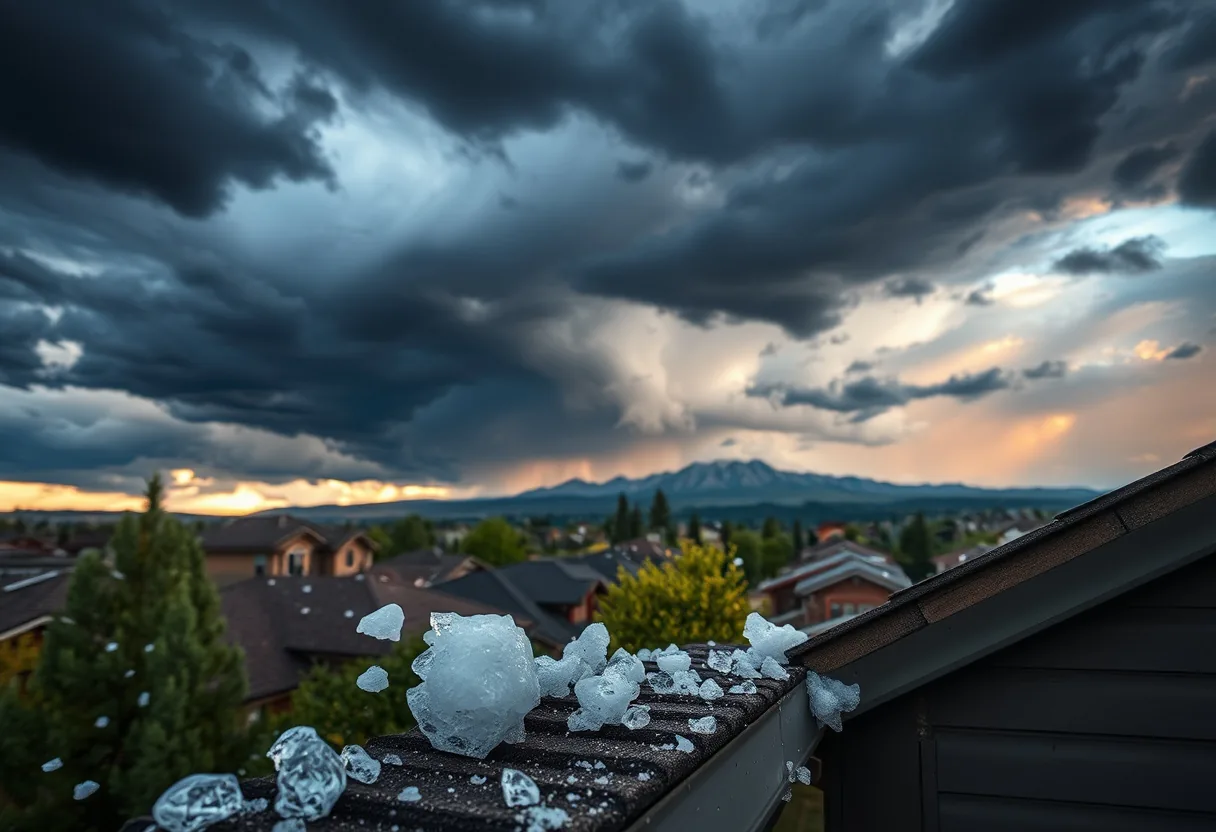
Why Colorado Springs Roofs Take a Beating
Colorado Springs and the surrounding Pikes Peak region sit squarely inside Hail Alley — the stretch of Colorado, Nebraska, and Wyoming that leads the nation in damaging hailstorms. Our elevation, dry mountain air, and afternoon thunderstorms combine to freeze and grow hail before it ever reaches the ground, and El Paso County catches more of it than almost anywhere in the country.
Hail season here runs roughly April through September, peaking in the hot, unstable afternoons of June and July. A single storm can dump stones from pea-size to baseball-size across a neighborhood in minutes. The July 2016 and August 2018 storms each caused hundreds of millions of dollars in roof and property damage across the Front Range, and smaller bruising storms roll through nearly every summer.
The hard part for homeowners is that hail damage often looks like nothing from the driveway. Your shingles can be badly bruised while the roof still appears intact — until granule loss and cracking let water in months later. That is exactly why a trained set of eyes on the roof after a storm matters so much. Start with a [free inspection](/quote/) and know for certain.
How to Spot Hail and Wind Damage
You do not need to climb a ladder to stay alert. Some signs of storm damage show up at ground level, and the rest we confirm during an on-roof inspection. Here is what actually tells the story on an asphalt shingle roof after a Colorado Springs storm.
Hail damage typically shows as:
- Bruising and soft spots — dark, dented impact points that feel spongy underfoot, like a bruise on an apple
- Granule loss — bald patches where the protective granules are knocked off, exposing the black asphalt mat underneath
- Cracked or split shingles — star-shaped fractures radiating from a point of impact
- Dented metal — dimples and dings in gutters, downspouts, flashing, roof vents, and valleys
- Damaged AC fins — bent and flattened fins on your air-conditioner condenser are a reliable hail fingerprint you can check yourself
Wind damage from the same storms shows up differently:
- Lifted or creased shingles — tabs folded back and re-laid, leaving a permanent crease and a broken seal
- Missing shingles — bare spots where whole tabs tore away, exposing the underlayment or deck
- Exposed or backed-out nails — fasteners that have popped up, a common leak entry point
Do not wait for a leak
By the time water shows up on your ceiling, hail and wind damage has usually been letting moisture into the deck for months. Catching it early keeps a repair from turning into a rotted-deck, mold-in-the-attic project. If a storm hit your area, get looked at even if everything seems fine.
Your Free Storm-Damage Roof Inspection
Every storm assessment starts with a thorough, no-cost inspection — and no obligation to hire us. A Pikes Peak Roofing specialist gets on your roof and inspects it the way an adjuster will, so nothing gets missed and nothing gets exaggerated.
- We inspect the full roof — every slope, the ridges, valleys, penetrations, flashing, and the soft-metal accessories that show impact first
- We document everything — dated photos of each hit, granule loss, and creased shingles, plus a test square measured out to count impacts per 100 square feet the way insurers score damage
- We check the rest of the property — gutters, downspouts, vents, window wraps, and the AC unit, because supporting damage strengthens the whole picture
- We hand you a written report — a clear, photo-backed summary of what we found and what it means for the life of your roof
If the roof is fine, we tell you it is fine — plenty of inspections end with a clean bill of health and a repair here or there. If there is real storm damage, that documented report becomes the foundation for everything that follows. Pair it with a routine roof inspection each year and you will never be caught off guard.
How We Help You Through the Insurance Claim
Filing a storm claim is where most homeowners feel lost, and it is where a roofer who does this every day earns their keep. We do not sell insurance and we do not speak for your insurer — we are the roofing experts standing on your side of the table, making sure the damage is fully seen and the roof gets built right. Here is how the service works, step by step.
| Step | What happens | Who does it |
|---|---|---|
| 1. File the claim | You call your insurer to open a claim and get a claim number and adjuster date | You — we coach you on exactly what to say |
| 2. Meet the adjuster | We climb the roof alongside your adjuster on inspection day and walk every marked hit together | Us, on site with you |
| 3. Review the scope | We compare the adjuster's written scope against our own documented findings line by line | Us |
| 4. Supplement if needed | When the scope misses damage or code-required items, we submit the photos and measurements to get it corrected | Us, with your insurer |
| 5. Schedule the work | Once the scope is settled, we set your build date, order materials, and manage the crew | Us |
| 6. Handle the paperwork | We complete the completion certificate and final documents your insurer needs to release funds | Us |
The reason we insist on meeting your adjuster in person is simple: two trained people on a roof see more than one, and a documented second opinion keeps legitimate damage from being written off. When a scope comes back light, our supplement — backed by dated photos and test-square measurements — is how missed line items get added back. You focus on your family; we handle the roof and the runaround.
Emergency Tarping and Temporary Leak Protection
When a storm tears shingles off or drops a limb through the deck, the roof cannot wait for a claim to close. Water intrusion multiplies the damage by the hour — into insulation, drywall, framing, and your belongings — so the first job is always to stop the water.
We provide fast emergency tarping and temporary leak protection across Colorado Springs and the surrounding communities. Our crew secures heavy-duty tarps and dries-in exposed areas to keep the weather out until the permanent repair is scheduled. Prompt, professional emergency work also protects your claim — insurers expect homeowners to prevent further damage, and a documented tarp shows you did exactly that.
Storm just hit? Call first, climb never.
A wet, hail-glazed roof is dangerous. Do not get up there yourself. Call 844-967-5247 and we will get a tarp on it and eyes on the damage — safely, and documented from the start.
Building Back Stronger With Class 4 Shingles
If you are replacing a hail-damaged roof anyway, this is the moment to make the next storm a non-event. Impact-resistant Class 4 shingles are rated to the highest UL 2218 standard — a two-inch steel ball dropped from twenty feet leaves them intact where a standard shingle would crack. In Hail Alley, that is not a luxury upgrade; it is the smart default.
Class 4 shingles resist the bruising and granule loss that end most roofs early, which means fewer repairs, fewer claims, and a roof that shrugs off the storms that used to total it. Many Colorado insurers also reward the upgrade with a rate discount, so the stronger roof can partially pay for itself over time — ask your insurer whether they offer an impact-resistant credit.
We install Class 4 systems from the major manufacturers as part of a full residential roof replacement. When your roof has to be rebuilt, building it back tougher than the one the storm just took is the easiest good decision you will make all year.
Timeline and What You Actually Pay
A storm-damage project typically moves from inspection to finished roof in a few weeks, gated mostly by how fast your insurer works. Here is the honest rhythm of it: inspection within a day or two of your call, the adjuster meeting once your insurer schedules it, scope agreement shortly after, then a one to two day tear-off and install once materials arrive.
On cost, storm work is refreshingly simple for the homeowner. When a claim is approved, the out-of-pocket number that matters to you is your deductible — the fixed amount your insurer set on your account. You pay that; the approved balance for the roof work is handled through your claim. We give you a clear written breakdown up front so there are no surprises at the end.
If the deductible itself is a strain, or the damage does not rise to a full claim, we offer flexible financing and claims assistance so a storm never means putting your family under a compromised roof. No pressure, no gimmicks — just a straight path from damaged to done.
Get Your Free Storm Inspection Today
If hail or high wind has moved through Colorado Springs, Monument, Falcon, Fountain, or anywhere in the Pikes Peak region, the responsible move is a quick look before small damage becomes a big leak. Our inspection is free, thorough, and honest — and if your roof is fine, that is exactly what we will tell you.
Schedule your [free inspection](/quote/) online or call 844-967-5247 to talk to a Colorado Springs roofer who knows Hail Alley cold. We will document the damage, stand beside you at the adjuster meeting, and put a stronger roof over your home.