The Roof Inspections We Perform
Not every inspection is looking for the same thing. A homeowner worried after a hailstorm needs something very different from a buyer three days out from closing. At Pikes Peak Roofing we run five distinct types of roof inspection across Colorado Springs and the surrounding region, and we tell you up front which one actually fits your situation.
- Free storm and hail damage inspection — after a hailstorm or wind event we climb the roof, document bruising and lifted shingles, and tell you plainly whether you have real damage or not. Always free, no pressure.
- Real-estate inspection — for buyers or sellers during a home sale, a detailed assessment of remaining roof life, defects, and repair needs, delivered as a written report you can hand to the other party or your agent.
- Annual maintenance inspection — a scheduled once- or twice-a-year check that catches small problems while they are still small and keeps a manufacturer warranty valid.
- Post-storm check — a targeted look after a specific weather event, focused on what that wind or hail could have done.
- Warranty inspection — verifying workmanship and material condition so your roof stays within the terms of its warranty.
If you are not sure which one you need, call 844-967-5247 and describe what happened. Most callers after a storm need the free inspection first — everything else follows from what we find up there.
What Our Inspector Actually Checks
A real inspection is not a glance from the driveway. Our inspector gets on the roof and into the attic, and works through the same checklist every time so nothing gets missed. Roofs fail at the details — a single cracked pipe boot can soak a ceiling long before anyone notices a shingle out of place.
- Shingles and granules — cracking, curling, lifted tabs, and granule loss in the gutters that signals a roof near the end of its life
- Flashing — the metal around chimneys, skylights, and wall junctions, where the majority of leaks actually start
- Valleys — the high-traffic water channels where two roof planes meet and shed the most runoff
- Penetrations and pipe boots — the rubber collars around vent pipes, which dry-rot and split fast in Colorado UV
- Ventilation — ridge and soffit vents that keep the attic from cooking shingles from below and trapping moisture
- Gutters and downspouts — clogs, separations, and granule buildup that back water up under the shingle edge
- Decking signs — sagging, soft spots, and staining that point to sheathing damage underneath
- Attic inspection — from inside, checking for daylight, water stains, damp insulation, and active leaks
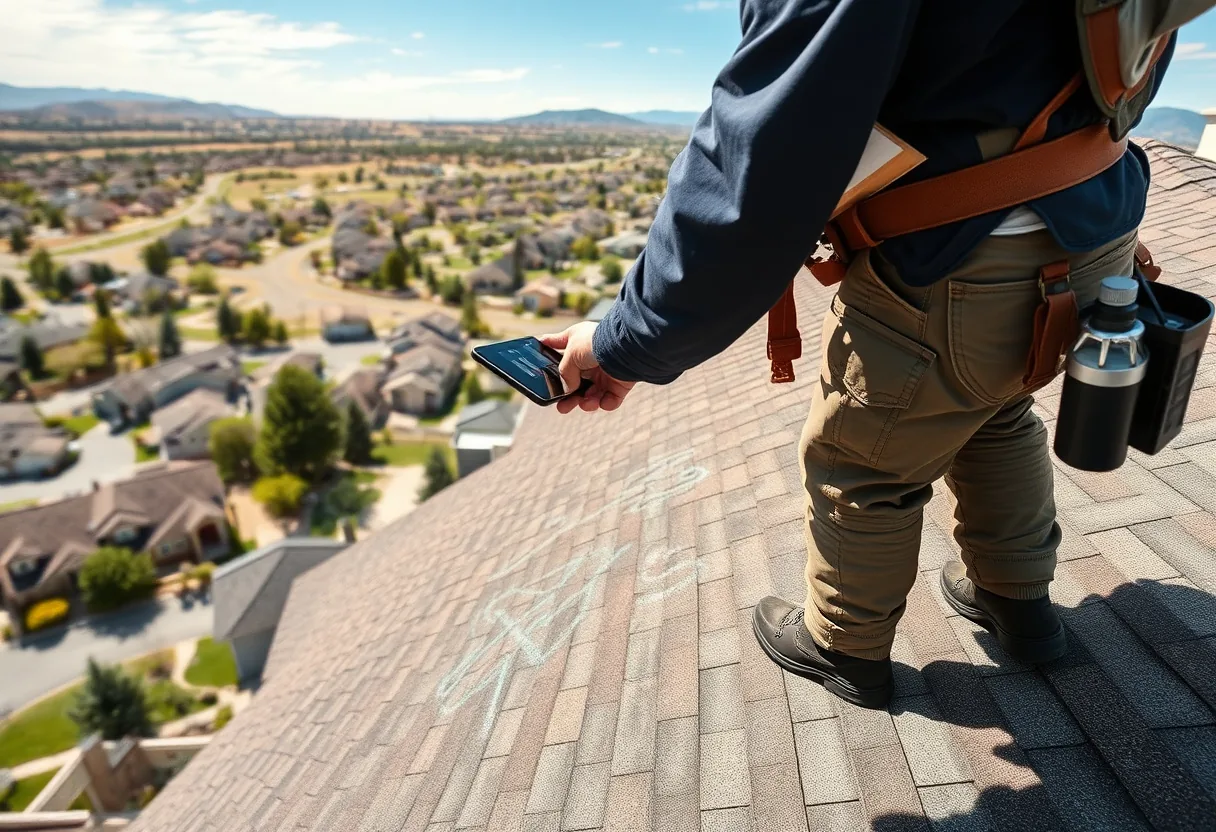
For suspected hail damage we use the chalk test: circling impact points with chalk to make bruising visible and countable in photos. Hail bruises knock the protective granules loose and crush the mat underneath — damage that is easy to miss from the ground but shortens a roof's life dramatically once the underlying mat is exposed to the sun.
You Get a Written Report With Photos
Every inspection ends with something in your hands, not just a verbal opinion. We deliver a written report with photos of every issue we found — labeled, located on the roof, and explained in plain language. It is a document you can keep, compare against next year, and use to make a decision instead of guessing.
Documenting a hail claim
If we find storm damage, that photo report is exactly what you need to document a hail insurance claim. We do not sell insurance and we are not your adjuster — but as a service we will photograph and detail the damage thoroughly so you have clear evidence when you file. Many homeowners bring our report to their claim, and we are glad to meet an adjuster on the roof to point out what we found.
That same report drives the next step. If the fix is minor, it feeds straight into a roof repair plan. If the roof is past saving, it lays out the honest case for a residential roof replacement. Either way, you are working from documented facts, not a sales pitch.
When to Get Your Roof Inspected in Colorado Springs
Timing matters more here than in most of the country. Colorado Springs sits in one of the most active hail corridors in the United States, and the calendar is predictable enough to plan around. We recommend a check before and after hail season, which runs roughly April through September along the Front Range.
A spring inspection tells you the roof is ready before the storms arrive. A fall inspection catches whatever the summer threw at it. Beyond that seasonal rhythm, book an inspection after any significant wind event — Front Range gusts routinely top 60 mph and lift or tear shingles — and whenever you are buying or selling a home, where the roof is often the single biggest question in the deal.
| Inspection type | When to get it | What it includes |
|---|---|---|
| Free storm / hail | Within days of a hailstorm or wind event | Full roof walk, chalk test, photo documentation of damage — free |
| Real-estate | During a home sale, buyer or seller side | Remaining-life assessment, defect list, detailed written report (may carry a fee) |
| Annual maintenance | Spring and/or fall, once or twice a year | Full checklist, minor issue flagging, warranty upkeep |
| Post-storm check | Right after a specific storm you are worried about | Targeted look at wind and hail impact points |
| Warranty | As required by your material or workmanship warranty | Condition and workmanship verification to keep the warranty valid |
Storm and hail inspections are free — there is never a charge to find out whether a storm hurt your roof. Detailed real-estate reports may carry a fee because they involve remaining-life analysis and formal documentation for a transaction, but we quote that up front so there are no surprises.
Why Altitude, UV, and Hail Make Inspections Non-Negotiable
Roofs in Colorado Springs age faster than roofs almost anywhere else, and it comes down to elevation. At roughly 6,000 feet the air is thinner, so the ultraviolet radiation hitting your shingles is far more intense than at sea level. UV bakes the oils out of asphalt, and dried-out shingles grow brittle, curl, and shed granules years ahead of the same product in a milder climate.
Stack hail on top of accelerated UV aging and you have a roof under constant assault. A single storm can bruise thousands of spots you will never see from the ground, and each bruise is a head start on granule loss and eventual leaks. The real danger is what happens after: water sneaking past a compromised shingle into the decking, where it rots the sheathing quietly until the repair is no longer a repair.
Regular inspection is how you get ahead of that. Catching a lifted shingle, a split boot, or a patch of hail bruising before it lets water reach the deck turns a hundred-dollar fix into the reason you never needed a new roof this decade. That is the entire economic argument for inspecting on schedule — small problems are cheap, and rotted decks are not.
What Happens After the Inspection
The point of an inspection is a clear decision, and there are really only three outcomes. Your roof is fine and we tell you so — no upsell, come back next season. Your roof needs a targeted fix, and we scope it. Or the roof is genuinely done, and we lay out the replacement honestly with the photos to back it up.
- Roof is sound — you get the report for your records and a suggested date for the next check. No work needed.
- Localized damage — we scope a roof repair: flashing, a few shingles, a boot, or a valley, priced from the documented findings.
- Storm damage — see our storm & hail damage service for the full documentation-and-repair path, claim assistance included.
- End of service life — we walk you through a residential roof replacement with materials suited to the Front Range climate.
You are never obligated to do the work with us, or with anyone. The inspection stands on its own — an honest read on your roof that you own and can act on however you choose.
Book a Roof Inspection Today
Whether a storm just rolled through, you are about to list your house, or you simply have not had eyes on your roof in years, the smart move is the same: get it inspected before a small problem becomes an expensive one. We cover Colorado Springs and the wider Pikes Peak region, and storm and hail inspections are always free.
Schedule your free inspection online, or call 844-967-5247 and tell us what is going on up there. We will get on the roof, into the attic, and back to you with a written report and photos — the facts you need to protect your home.